


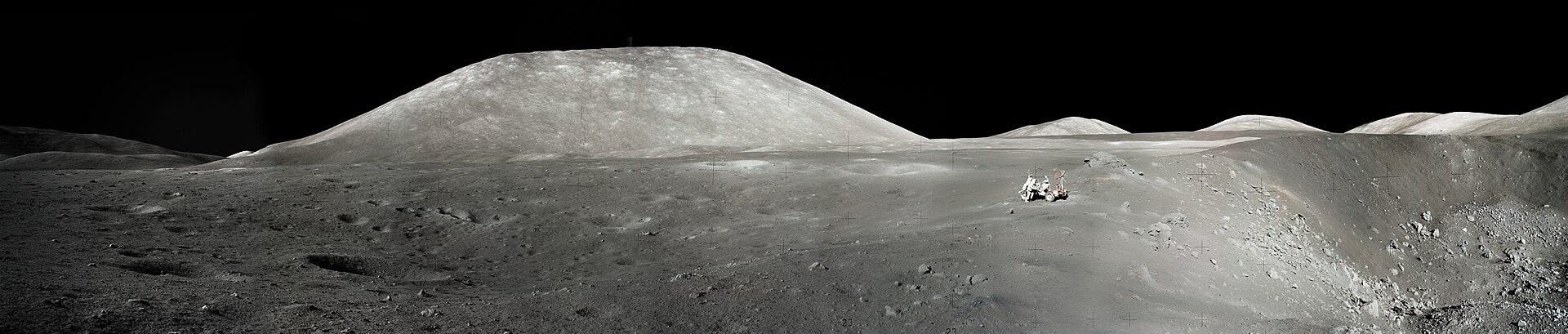
The Moon is having a second career. Half a century after the last Apollo astronaut left its surface, the grey world that once symbolised a finished race is being surveyed again, this time not just for flags and footprints but for resources. At its poles, in craters that have not seen sunlight for billions of years, lies water ice. That ice could be drunk, breathed and split into rocket fuel, and its presence is reshaping how space agencies and private companies plan the next decade of exploration.
NASA’s Artemis programme aims to return astronauts to the lunar surface and build a sustainable presence there, with the south pole as the focal point. For a small magazine that loves slow, careful making, there is something appealing in the philosophy taking shape: rather than hauling everything from Earth at ruinous cost, explorers intend to live off the land, much as earlier generations of travellers learned to do. Readers can find more features like this on our homepage.
Why lunar ice changes the maths
Lifting a kilogramme from Earth into orbit is expensive; lifting it all the way to the Moon’s surface costs far more. Water is heavy, indispensable and, it turns out, already waiting at the destination. Melted and purified, polar ice becomes drinking water. Split by electrolysis, it becomes oxygen for breathing and hydrogen and oxygen for propulsion. A depot of lunar-made fuel would change mission design completely, turning the Moon from a destination into a refuelling stop for journeys deeper into space.
Confirming how much ice exists, and in what form, is the immediate task. Orbiters have detected hydrogen signatures consistent with ice, and a NASA impact experiment in 2009 threw up a plume containing water. But ice mixed into soil like frost is a different mining proposition from clean slabs, and the permanently shadowed craters where it hides are among the coldest places in the solar system, hostile to machinery and electronics alike.
Who is going, and how
The new lunar effort is deliberately plural. Alongside NASA’s crewed plans, robotic landers from commercial firms are being contracted to deliver instruments and prospecting tools, while other nations pursue their own polar missions, as the mission pages at NASA outline. Drills, spectrometers and small rovers will test the soil before anyone commits to extraction plants. The engineering is unglamorous and exacting: seals that work in abrasive dust, power systems that survive fourteen Earth days of darkness, and heaters that keep ice samples from vanishing into vacuum.
There are legal questions travelling with the hardware. The Outer Space Treaty forbids national appropriation of the Moon, but extracting and using resources sits in a greyer area that newer accords attempt to clarify. How those rules settle will shape whether the lunar economy becomes a shared scientific frontier or a patchwork of competing claims staked by whoever lands first.
A slower kind of space age
What distinguishes this era from Apollo is patience. The goal is not a single dramatic landing but infrastructure: communications relays, navigation beacons, landing pads built from sintered soil to keep dust from sandblasting nearby equipment. Each piece is modest; together they describe a working settlement assembled over years, more like building a research station in Antarctica than staging a spectacle.
For those of us who celebrate small batches and patient craft, the resonance is hard to miss. The Moon will be opened not by one giant leap but by hundreds of careful, tested, incremental steps, many of them failures learned from quietly. When astronauts eventually drink water drawn from a shadowed crater, it will be the most local ingredient imaginable, harvested four hundred thousand kilometres from the nearest tap.

1 Comment
Pingback: Try Linux Without Changing Your Computer: The USB today