


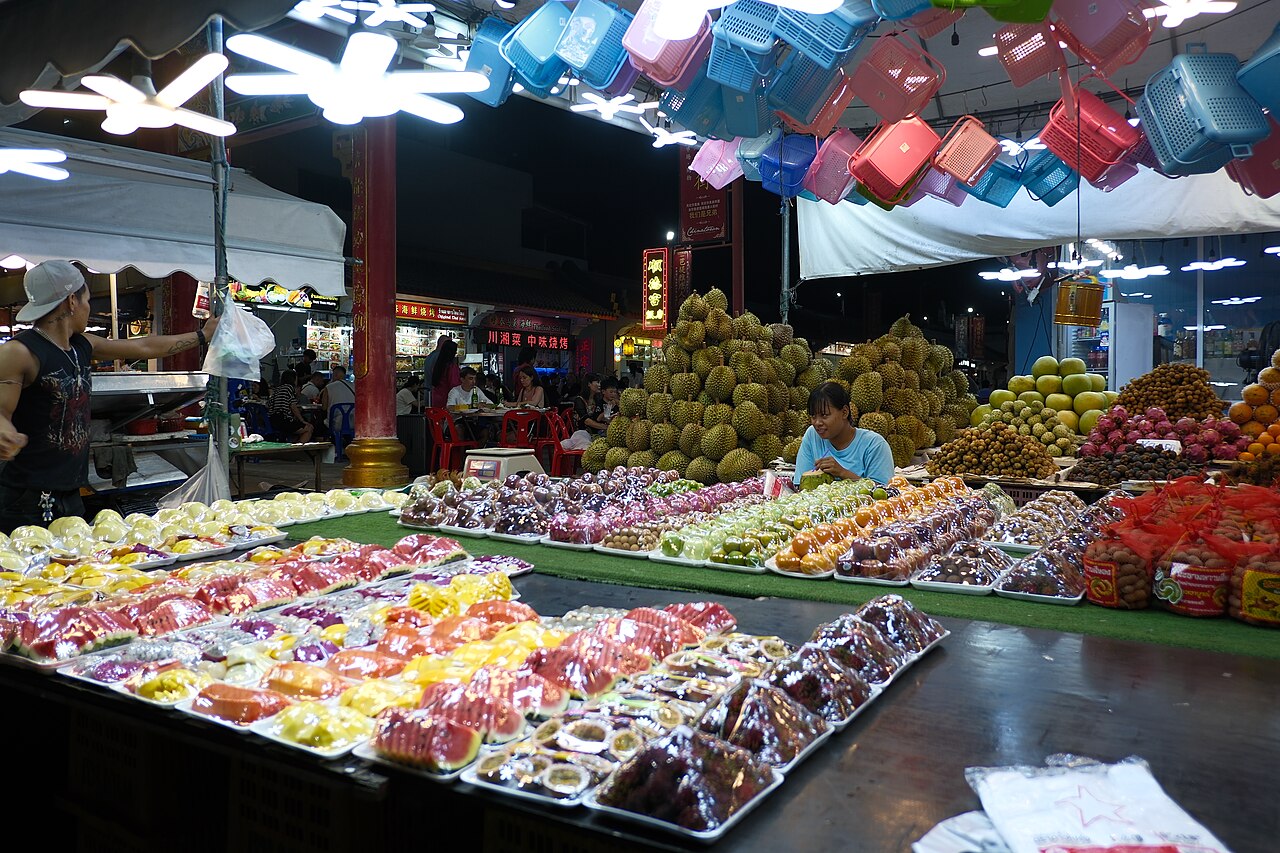
Some findings arrive as shocks. This one arrives as vindication — for grandparents, school nurses and everyone who ever lost an argument with a teenager over an uneaten apple. An Australian research team followed 6,500 children from the age of twelve for three years, tracking what they ate and how their health developed. Their conclusion is disarmingly simple: each additional daily serve of fruit was associated with measurable benefits. Behind that simplicity sits a study worth reading closely, because its design is exactly what nutrition science so often lacks.
Why this cohort convinces
Nutrition headlines usually rest on one-off food questionnaires and adults recalling decades of diet. This study began with symptom-free 12-year-olds — a clean baseline — and returned to them repeatedly through the turbulence of early adolescence, when growth, hormones and independence all rewrite eating habits at once. Repeated measures let the researchers watch change within individuals rather than just differences between them, and the analysis adjusted for the usual suspects — total diet quality, physical activity, sleep, household circumstances. The serves themselves were modest, real-world units: a banana, an apple, a handful of grapes. Guidance from the World Health Organization recommends children build towards five daily portions of fruit and vegetables; this cohort shows the gradient of benefit beginning with the very next serve, not at some finish line.
What might fruit be doing?
The candidate mechanisms are pleasingly tangible. Soluble fibre feeds gut bacteria that produce short-chain fatty acids, compounds implicated in immune regulation and metabolic health. Potassium nudges blood pressure in the right direction during the years vascular habits form. Vitamin C, folate and polyphenols support growth and temper inflammation. And there is displacement, the underrated pathway: a stomach containing an orange at 4 p.m. has measurably less room — and appetite — for the ultra-processed alternative. Nutritionists reading the study emphasise the matrix over the molecules: whole fruit outperforms juice and supplements in study after study, because the food is the delivery system.
The caveats, kept honest
An observational study cannot prove the fruit did it. Teenagers who eat more fruit differ from those who do not in ways no adjustment fully captures — parental habits, income, health consciousness that touches everything. The authors say so themselves. Yet the field judges such work by pattern: a dose–response gradient, consistency with mechanism, alignment with trials of fruit-rich dietary patterns. By those standards the finding earns its confidence. Our features desk applies the same scepticism checklist to every nutrition headline we publish.
A small serve of perspective
The environment is the intervention
Read the study alongside the behavioural literature and a design principle emerges: teenagers eat what is there. Intake tracks availability — in the home fruit bowl, the school canteen, the corner shop between school and the bus — far more faithfully than it tracks knowledge or intention. That is why public-health responses to findings like this one focus on settings rather than lectures: procurement standards for school food, pricing that stops punishing the healthy choice, marketing rules for the products engineered to displace fruit entirely. The study hands those policymakers their strongest kind of ammunition — not a modelling exercise, but measured outcomes in real adolescents over real years. The intervention it implies is almost embarrassingly environmental: put fruit where teenagers already are, price it so they can choose it, and let appetite do the rest.
The study’s most radical implication may be its scale of ambition. Not a diet overhaul, not a supplement stack, not an app — one more serve of fruit, daily, sustained across the years when bodies are built. In a health culture drawn to the complicated and the purchasable, 6,500 Australian teenagers have produced evidence for the obvious. Sometimes the obvious is obvious because it is true. More features and essays at our homepage.
