


There is a particular cruelty to inflammatory bowel disease: by the time it is diagnosed, it has usually been at work for years. Patients describe the pre-diagnosis era in weary detail — the normal scans, the dismissed pain, the diets that failed to fix what was never a diet problem. Now imagine rewinding that story. In freezers across Europe and North America sit millions of blood samples donated by healthy people to research biobanks. When some of those donors later developed Crohn’s disease or ulcerative colitis, scientists went back to their early samples and read them like a letter from the disease’s beginning. What they found could restructure how these conditions are found.
The signal in the freezer
The studies identified proteins and immune signatures in pre-diagnosis blood that separated future patients from matched controls — measurably, and as much as a decade early. The biology makes sense in retrospect: Crohn’s is an immune-mediated condition, and immune systems begin misbehaving before guts begin hurting. Inflammation smoulders at low level, the body’s signalling chemistry shifts, and standard blood analytes — the same ones in a routine panel — carry the trace. The Mayo Clinic‘s summary of Crohn’s stresses its insidious onset; the biobank work gives that onset a measurable prehistory.
Stories behind the statistics
Ask patients what an extra decade would have meant and the answers are concrete. The university years not lost to flares misattributed to exam stress. The pregnancies planned around a known condition rather than ambushed by it. The bowel resection that might have been prevented by treatment started before scarring. Diagnosis delay is not an abstraction in IBD — studies link it directly to worse outcomes — which is why patient organisations such as Crohn’s & Colitis UK campaign on referral speed even within today’s technology. A predictive blood test would not just speed the existing pathway; it would create a new one, beginning before symptoms force the issue.
Science’s remaining homework
Between a journal finding and a clinic test lies the valley every medical innovation must cross: replication in diverse populations, assay standardisation, regulatory approval, and the ethical architecture of prediction — who is told, with what certainty, and what they are offered in response. A risk estimate without an intervention is a burden; the research community knows the test only becomes medicine when paired with monitoring protocols and early-treatment trials. Those are under design. Our magazine desk will follow the validation cohorts as they report.
The decade, reclaimed
The donor’s gift, returned
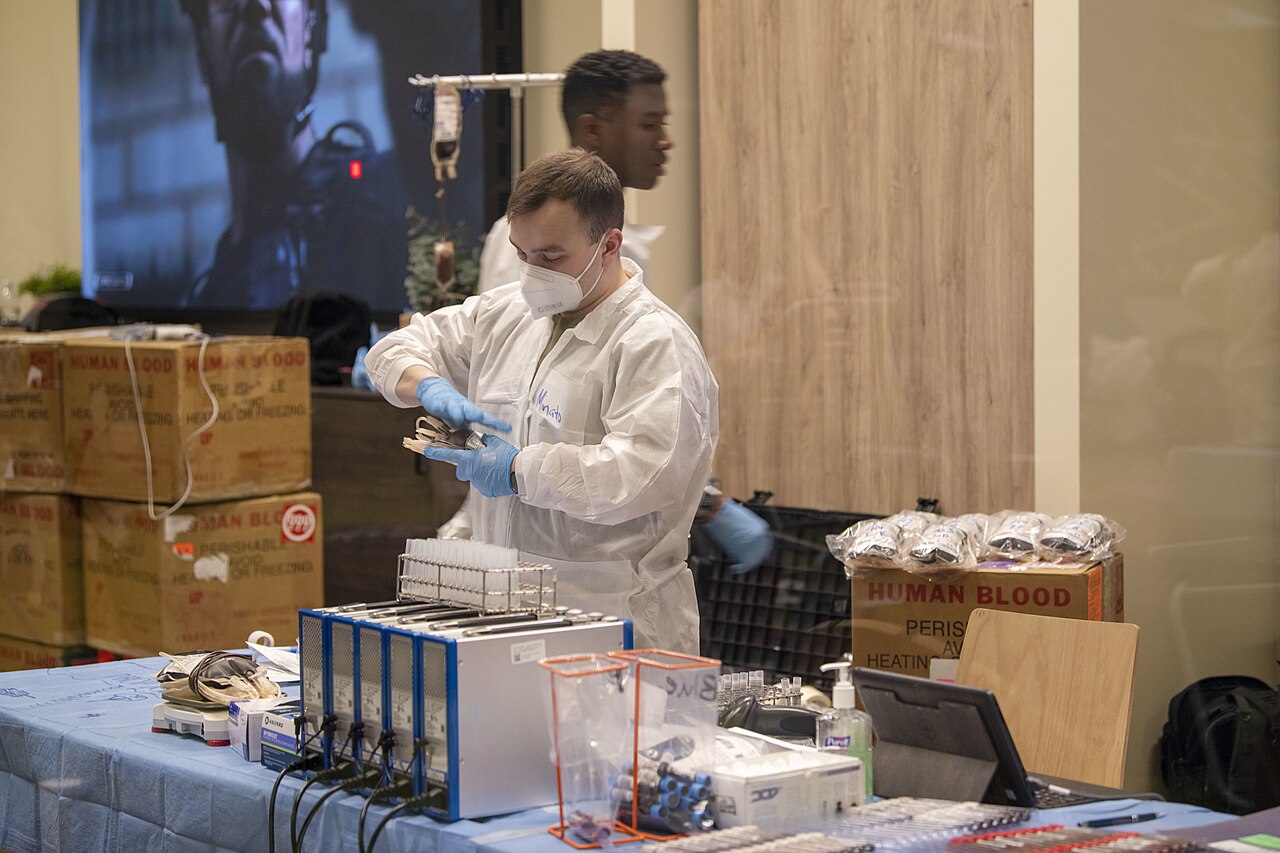
There is a human detail inside the methodology that deserves its own paragraph. Biobank donors gave their blood on ordinary days, for research they would never see, on conditions they did not have. Years later, some of them became patients — and their own earlier samples became the evidence that may spare the next generation their diagnostic odyssey. Research ethics committees call this the gift relationship, and the Crohn’s marker studies are among its purest products: no donor was treated, tested or even contacted, yet their foresight is now measurable in years of warning returned to strangers. Every recruitment drive for the next biobank cohort is, whether it knows it or not, asking citizens to perform the same act of temporal generosity — to bank a piece of their healthy present against somebody else’s future. Science rarely gets to be this literal about gratitude.
It is easy, reading medical news, to collect breakthroughs like weather reports. This one deserves a slower look. A simple blood test that sees Crohn’s coming ten years out would convert one of medicine’s most demoralising diagnostic odysseys into a managed, monitored glide path — and stand as proof that the samples donors gave away, altruistically, years ago contained their own futures. The disease whispers first. We are learning to listen. More long-form health writing at our homepage.
